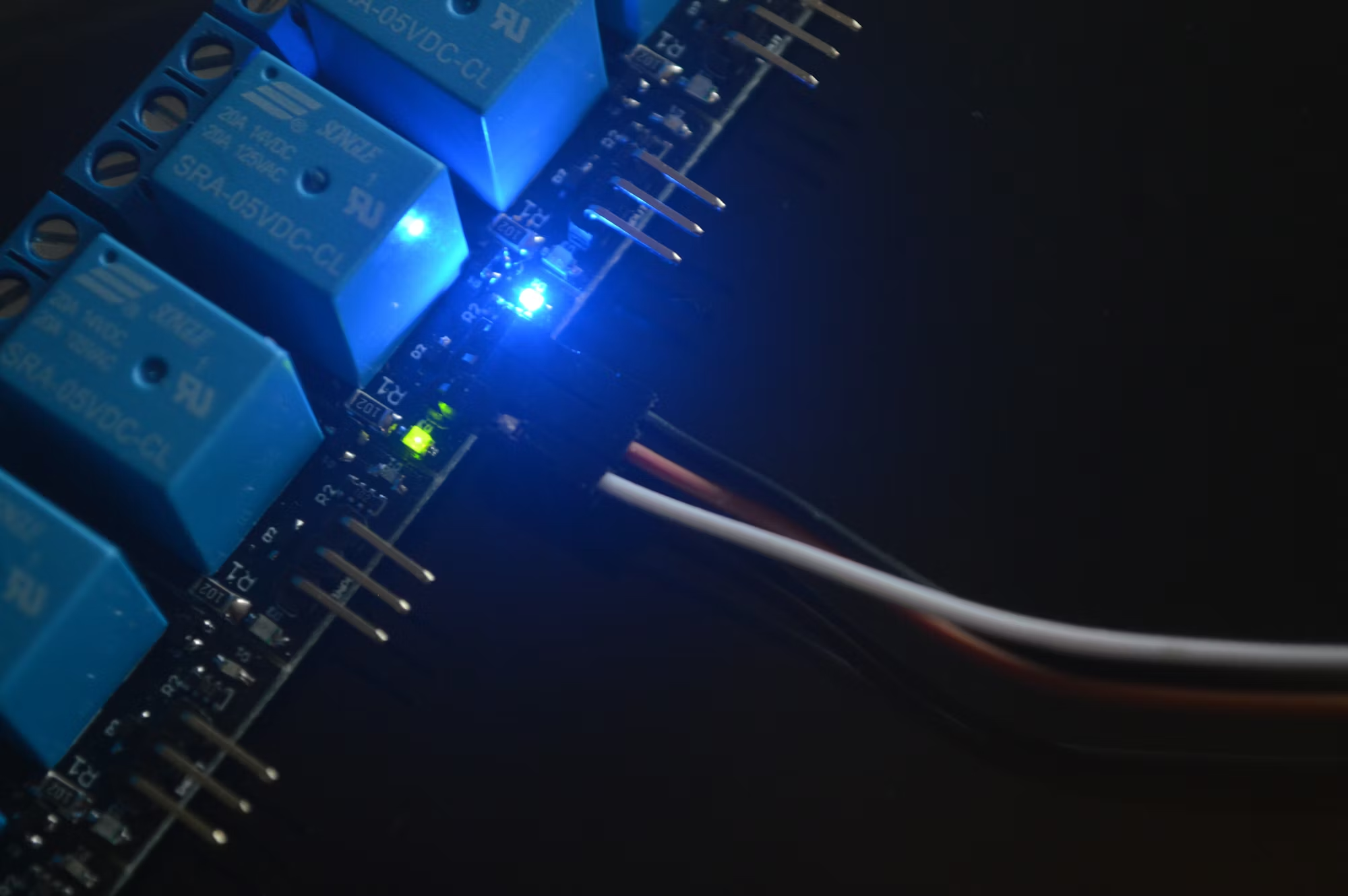
As we navigate through the digital age, the landscape of computing hardware continues to evolve at an unprecedented pace. Innovations in technology not only enhance performance but also transform how we interact with our devices. In this article, we will delve into the key trends shaping the future of computing hardware, examining how these advancements will influence everything from personal computing to enterprise solutions.
Rise of Artificial Intelligence (AI) in Hardware
Artificial intelligence is one of the most significant trends influencing computing hardware today. As AI algorithms become more sophisticated, the demand for specialized hardware that can efficiently process vast amounts of data has surged. Companies are developing AI accelerators, such as Google’s Tensor Processing Units (TPUs) and NVIDIA’s Tensor Cores, designed specifically for machine learning tasks. These chips enable faster data processing and improved performance for AI applications, from natural language processing to image recognition.
Additionally, hardware manufacturers are integrating AI capabilities into consumer devices. For instance, laptops and smartphones are now equipped with dedicated neural processing units (NPUs) that enhance features like voice recognition, photography, and augmented reality. This trend towards AI-enhanced hardware is expected to continue, driving further innovation and improving user experiences across various applications.
The Shift to Energy Efficiency
As environmental concerns grow, the tech industry is increasingly focused on creating energy-efficient hardware. This shift is driven by both regulatory pressure and consumer demand for sustainable practices. Modern CPUs and GPUs are being designed with power-saving features that reduce energy consumption without sacrificing performance. Innovations such as dynamic voltage scaling and energy-efficient architectures allow devices to adapt their power usage based on workload, significantly lowering overall energy costs.
Moreover, the rise of renewable energy sources is encouraging data centers to adopt greener technologies. Companies are investing in energy-efficient cooling systems and optimizing server designs to reduce their carbon footprint. As energy efficiency becomes a priority, we can expect to see further advancements in hardware designed with sustainability in mind, benefiting both the environment and consumers’ wallets.
Advancements in Quantum Computing
Quantum computing is another groundbreaking trend poised to reshape the computing landscape. Unlike traditional computers that use bits to process information, quantum computers leverage qubits, which can exist in multiple states simultaneously. This unique property allows quantum machines to solve complex problems much faster than their classical counterparts.
While still in its early stages, quantum computing holds tremendous potential for industries such as cryptography, drug discovery, and financial modeling. Major tech companies and research institutions are investing heavily in quantum hardware development, striving to overcome challenges such as qubit stability and error correction. As breakthroughs occur, quantum computing could revolutionize how we approach problem-solving, making previously intractable tasks feasible.
Increasing Importance of Graphics Processing Units (GPUs)
The role of GPUs has expanded far beyond gaming and graphics rendering. Today, they are essential for various tasks, including scientific simulations, deep learning, and data analysis. As the demand for high-performance computing grows, GPUs are becoming a critical component in data centers and enterprise environments.
Modern GPUs are designed to handle parallel processing, making them ideal for tasks that require massive amounts of data to be processed simultaneously. This capability is particularly valuable in fields such as artificial intelligence and machine learning, where large datasets must be analyzed quickly. As companies continue to embrace data-driven decision-making, the importance of GPUs in computing hardware will only increase, leading to further innovations in their design and functionality.
The Evolution of Storage Solutions
The storage landscape is undergoing a significant transformation as the need for speed and capacity rises. Solid-State Drives (SSDs) have largely replaced traditional Hard Disk Drives (HDDs) in consumer and enterprise markets due to their superior performance. SSDs provide faster read and write speeds, resulting in shorter boot times and quicker data access.
Looking ahead, new storage technologies such as Non-Volatile Memory Express (NVMe) and 3D NAND are set to revolutionize data storage. NVMe SSDs offer even higher speeds by utilizing a direct connection to the motherboard, significantly reducing latency. Additionally, 3D NAND technology allows for increased storage density, enabling manufacturers to produce larger capacity drives without sacrificing performance. These advancements in storage solutions will continue to play a vital role in enhancing overall system performance and user experience.
The Proliferation of Edge Computing
As the Internet of Things (IoT) expands, edge computing is gaining traction as a way to process data closer to the source rather than relying solely on centralized data centers. This approach reduces latency, enhances speed, and allows for real-time data processing. Hardware designed for edge computing includes specialized devices that can handle specific tasks, such as IoT gateways and microdata centers.
The shift towards edge computing necessitates the development of hardware that is not only powerful but also energy-efficient and capable of operating in diverse environments. Companies are exploring innovative designs that integrate processing capabilities directly into IoT devices, enabling them to perform complex computations without relying on cloud services. As this trend continues, we will see an increasing demand for robust edge computing hardware capable of supporting the growing number of connected devices.
Customization and Modular Hardware
The future of computing hardware is also leaning towards customization and modularity. As users seek systems tailored to their specific needs, manufacturers are responding by developing modular components that can be easily upgraded or replaced. This approach allows users to customize their systems according to their preferences, enhancing both performance and longevity.
For instance, gaming PCs are increasingly utilizing modular designs that allow for easy upgrades of GPUs, cooling systems, and storage. This trend not only empowers users but also encourages sustainability by reducing electronic waste. As the tech community embraces the idea of upgradable hardware, we can expect to see more innovative solutions that prioritize flexibility and user empowerment.
Conclusion
The future of computing hardware is bright, with numerous trends shaping its evolution. From the rise of AI and quantum computing to the focus on energy efficiency and edge computing, each advancement presents exciting opportunities for both consumers and businesses. As we embrace these changes, staying informed about emerging technologies will be crucial for making educated decisions when building or upgrading systems. By understanding these trends, we can better prepare for a future where hardware continues to play a pivotal role in our daily lives, enabling us to achieve more than ever before. As technology progresses, the possibilities are limitless, and the journey ahead is sure to be filled with innovation and discovery.